| FAQ |
| Q1. What are the advantages of the ARM-based MediaTek Genio 520 platform used in LU520 compared with NVIDIA Jetson or traditional x86 IPCs? How should users choose the right Edge AI platform? |
LU520, NVIDIA Jetson, and traditional x86 IPCs serve different market needs. Platform selection should not be based on AI TOPS alone, but should also consider AI computing requirements, power consumption, industrial I/O, operating systems, software ecosystems, and deployment conditions. With an appropriate level of AI performance, LU520 combines low power consumption, fanless operation, Android/Linux support, and industrial I/O to reduce the complexity of Edge AI system integration.
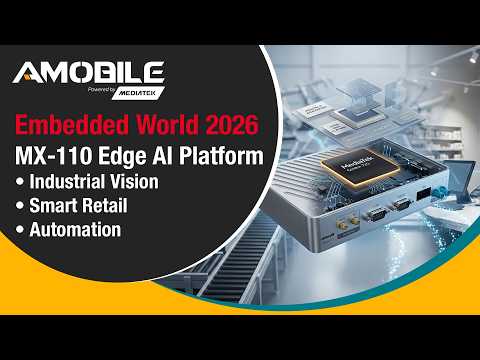
LU520 is powered by the MediaTek Genio 520 platform and delivers up to 10 TOPS of AI performance. It integrates CAN Bus, RS-485, Digital I/O, Gigabit Ethernet, Wi-Fi 6, and Bluetooth 5.3, while supporting Android 15 and Linux. It is well suited for Edge AI applications that require fanless operation, low power consumption, compact size, and direct integration with industrial equipment.
By comparison, the NVIDIA Jetson Orin Nano series can deliver up to 67 TOPS of AI performance and provides a mature CUDA, JetPack, and NVIDIA AI software ecosystem. It is better suited for larger AI models, high-load multi-channel Vision AI, Transformer models, LLMs, or applications that heavily depend on CUDA. However, Jetson Orin Nano-based systems generally involve higher platform costs and may also require greater consideration for system size, thermal design, and power consumption than MediaTek Genio 520-based solutions.
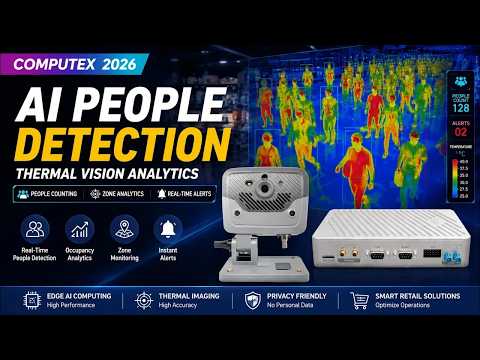
Therefore, for applications such as smart retail, AOI inspection, smart security, equipment monitoring, AI kiosks, industrial automation, or large-scale distributed Edge AI deployments where extremely high-end GPU performance is not required, LU520 provides an integrated platform combining AI computing, industrial communication, and device connectivity, with advantages in cost, power efficiency, and system size.
If a project requires large generative AI models, compute-intensive multi-channel image analysis, or software that is highly dependent on NVIDIA CUDA—and power consumption, thermal design, system size, and higher platform cost are not major concerns—a Jetson-based platform may be a more suitable choice. |
| Q2. How is LU520 different from other Edge AI Boxes based on the same MediaTek Genio 520 platform? |
Among Edge AI Boxes based on MediaTek Genio 520, some products focus more on digital signage, smart displays, and dual-display applications, and therefore provide interfaces such as dual HDMI and dual Gigabit Ethernet.
LU520, by contrast, is designed more specifically for Edge AI and Industrial IoT integration. In addition to Gigabit Ethernet and USB, it provides CAN Bus, RS-485, six Digital I/O channels, Wi-Fi 6, and Bluetooth 5.3, allowing direct connection to sensors, equipment controllers, and other industrial devices.
Therefore, even when products use the same MediaTek Genio 520 platform, selection should not be based on TOPS alone. If a project prioritizes multi-display output, a platform with richer display interfaces may be more suitable. If AI inference results need to be directly integrated with CAN Bus, RS-485, or Digital I/O devices, LU520's industrial I/O configuration is better suited for Edge AIoT applications. |
| Q3. Does LU520 support dual boot between Android and Linux, or OS customization? |
AMobile provides standard support for Android 15 and Linux based on Yocto 5. Customers can select the operating system that best fits their application requirements.
Android is recommended for applications that emphasize user interfaces, touch-based HMI, and the Android application ecosystem. Linux is more suitable for industrial applications that require greater system-level customization, background services, and parallel software processing.
Support for multiple operating systems does not necessarily mean that standard LU520 units provide Android/Linux dual-boot switching. Dual-boot configurations or customized OS requirements can be evaluated based on individual project needs. |
| Q4. Is the AI development toolchain for the MediaTek Genio 520 platform used in LU520 easy to use? |
LU520 supports MediaTek's NeuroPilot AI development platform and works with mainstream AI development ecosystems such as TensorFlow, PyTorch, and ONNX.
Developers can use MediaTek's model conversion and optimization tools to convert pretrained AI models into formats suitable for deployment on LU520 and accelerate AI inference using the Genio 520 hardware.
This helps simplify the process of bringing existing AI models from development environments to Edge AI applications. |
| Q5. What wireless connectivity does LU520 support? Is an additional wireless network card required? |
LU520 integrates Wi-Fi 6 and Bluetooth 5.3 directly on the system, so no additional PCIe or M.2 wireless network card is required for standard Wi-Fi or Bluetooth connectivity.
The integrated wireless connectivity enables high-throughput, low-latency data transmission and device communication for applications such as Edge-to-Cloud connectivity, wireless device management, sensor integration, and smart equipment connectivity. |
| Q6. Does LU520 support remote OTA updates for Edge AI software maintenance? |
Yes. Through the Android 15 or Linux software environment supported by LU520, developers can integrate an OTA mechanism with a cloud-based device management platform.
This enables remote firmware upgrades, software patches, application updates, and AI model updates without requiring maintenance personnel to visit each deployed device.
OTA integration can significantly reduce maintenance costs for large-scale Edge AI deployments. The actual OTA server, device management platform, rollback mechanism, and security policies can be implemented according to the customer's software and cloud architecture. |
| Q7. What standard communication interfaces does LU520 provide for connecting legacy industrial equipment and sensors? |
LU520 provides standard industrial communication interfaces including CAN Bus and RS-485.
These interfaces allow engineers to connect LU520 directly to existing PLCs, motor controllers, industrial sensors, and other field devices, reducing the need for additional protocol converters or interface boards.
Together with Gigabit Ethernet and Digital I/O, LU520 can serve as an Edge AI computing and communication node between industrial equipment, sensors, control systems, and higher-level applications. |